How does the brain wire itself with such precision?
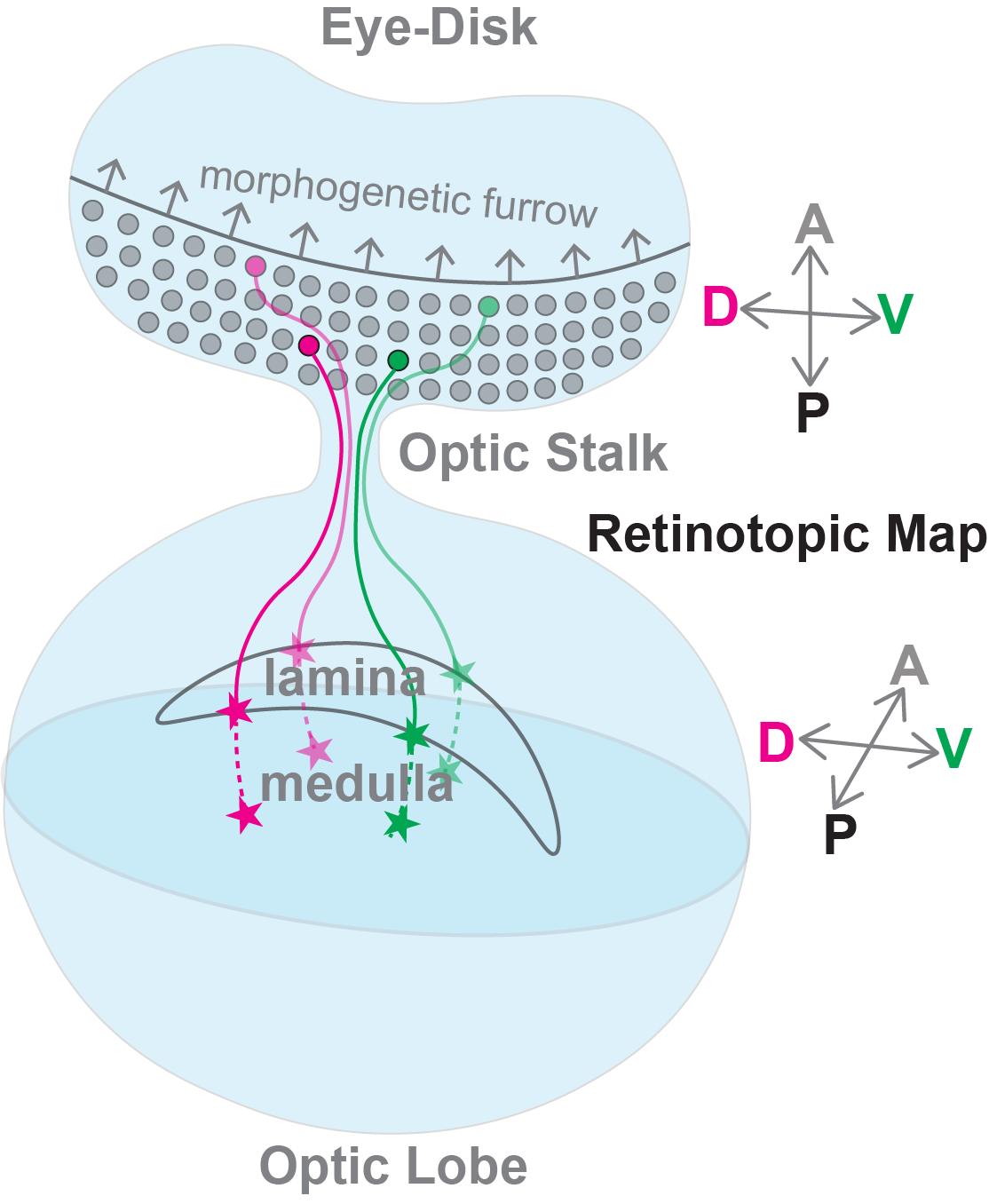
Schematic of the Drosophila visual system. Photoreceptor axons project from the eye disc through the optic stalk to the optic lobe, forming a precise retinotopic map in the lamina and medulla.
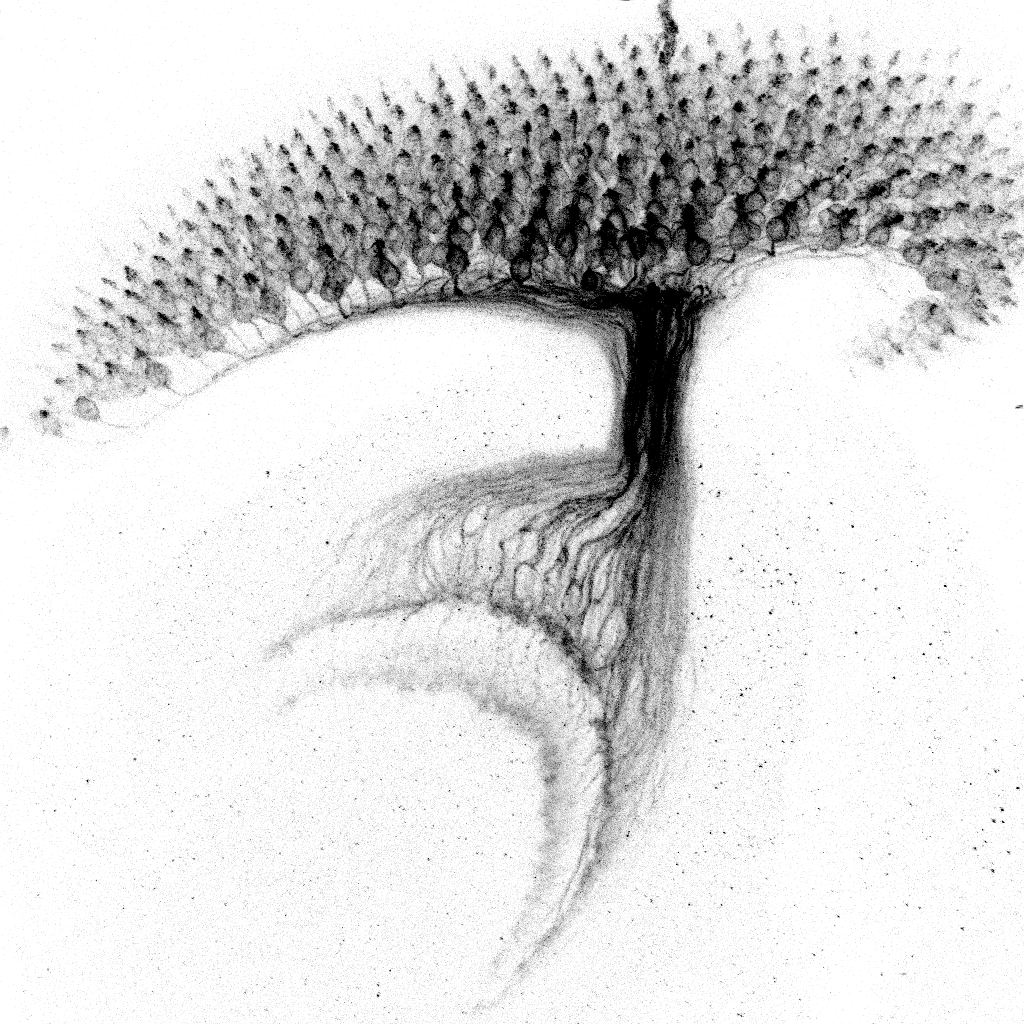
Photoreceptor axons labeled with Chaoptin (24B10) projecting from the Drosophila retina through the optic stalk to the lamina neuropil.
The nervous system contains billions of neurons connected with remarkable precision, yet how developing neurons find their correct targets remains one of the central questions in neuroscience.
I use the Drosophila visual system to study how developing neurons establish precise patterns of connectivity. In sensory systems, neighboring neurons often connect to neighboring locations in the brain, forming topographic maps that provide a powerful framework for understanding circuit assembly.
I am interested in three fundamental questions:
How do developing neurons acquire positional information?
How is this information maintained as axons navigate toward their targets?
How do target tissues provide the cues necessary for accurate circuit assembly?
To address these questions, I combine Drosophila genetics, high-resolution imaging, quantitative analysis, and computational modeling. By integrating these approaches, I seek to uncover the molecular and cellular mechanisms that establish topographic maps and enable precise neural circuit assembly.